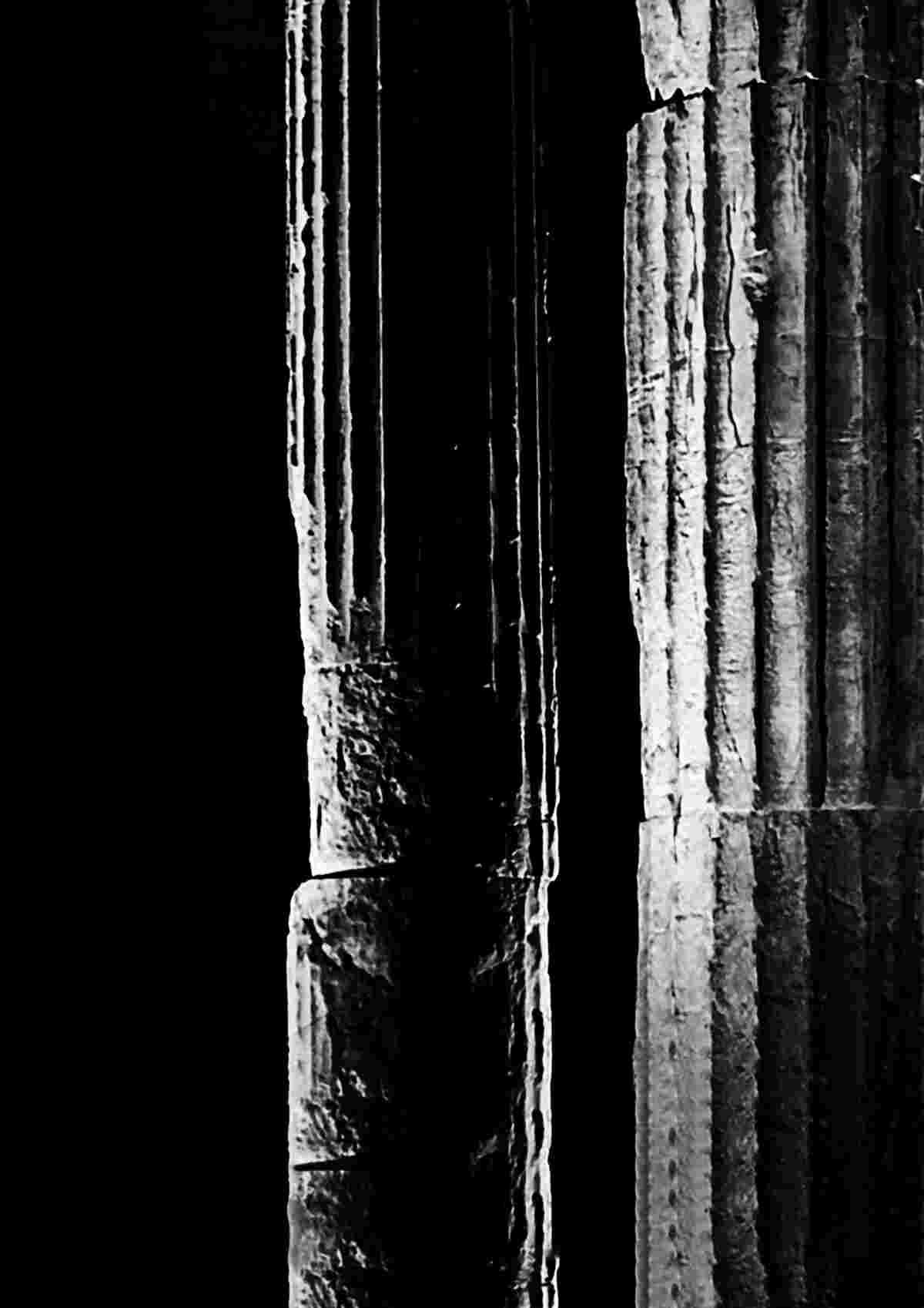
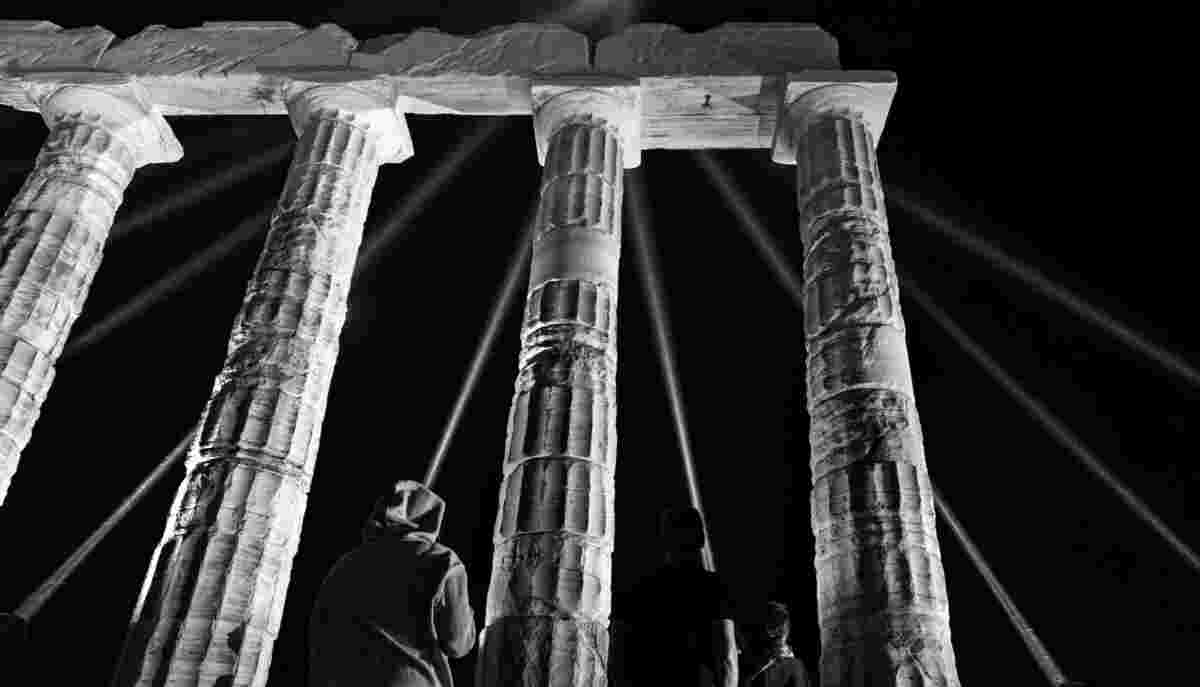
Το φως είναι η ψυχή του κόσμου — και η γλώσσα μέσα από την οποία αυτός μας αποκαλύπτεται. Χώροι γίνονται ατμόσφαιρες. Αρχιτεκτονήματα γίνονται μνήμη. Μνημεία γίνονται σύμβολα. Στιγμές ανάγονται σε μύθους.

Architecture & Light
Light is not an accessory to architecture; it is part of its structure. It alters what we understand a space to be — its boundaries, its weight, its temperature. A wall can feel solid in the morning and almost porous at dusk. A surface can shift from mute to articulate with the slightest change in illumination.
At Edeko Lighting Studio, we approach lighting as a form of reading. We study how a building behaves, how it sits in its surroundings, and how people move through it. The role of light is to support this behaviour: a room feels coherent when light respects its identity; a façade feels honest when illumination acknowledges its rhythms and proportions.
In our work, light is treated as a material that happens to have no body. Good lighting does not impose itself; it clarifies the logic of a space and the life unfolding within it. When treated with care, light allows architecture to be understood in its full dimension — not as an image, but as an experience. It turns the act of inhabiting a space into something attentive, grounded, and quietly resonant.
Light as Revelation
Light reveals far more than what the eye can register. It is a form of understanding — quiet, precise, and shared. Each person encounters it differently, yet its presence creates a common language that needs no translation. Light can be thought, sensation, memory. It exposes what is essential, not only the visible but also the quietly significant.
In our work, light functions as a kind of authorship. It decides what is emphasised and what recedes, shaping the way an image forms in the mind of the observer. A shift in illumination can create a different version of the same moment, altering what we pay attention to and how long we stay with it.
Within a project, light builds atmosphere without dictating narrative, allowing each viewer to construct their own reading. Because light is a form of energy; it moves, transmits, and unsettles just enough to awaken emotion. Through it, even the most familiar space can acquire an unexpected tenderness.
A poetic approach to lighting design strengthens the relationship between people, the built environment, and the passing of time. It invites contemplation rather than spectacle. Ultimately, the task is simple: to unveil what usually goes unnoticed. When light is applied with care, the materials, proportions, and rhythms of a space begin to express themselves. The poetry was always there — we merely give it a chance to surface.

The Art of Illumination
Lighting design is both a craft and a discipline. It exists in the space between expression and restraint. Light is an interplay of decisions that are at once technical and profoundly artistic. In lighting, as in music, the pauses matter as much as the notes. Without shadow, brightness becomes flat; without darkness, light loses its meaning. Every project begins with this understanding: that illumination is a dialogue carried out in silence.
In practice, the artistic and the functional are never separate. Every choice of tone, angle, or intensity serves a dual purpose: to support the needs of the space and to articulate its character. This is our own interpretation of “visual silence,” where emptiness, darkness, and restraint allow light to breathe, to settle, to reveal.
Because lighting design is a synthesis. It draws on architectural reasoning while inviting artistic intuition. When these forces align, light becomes inseparable from the structure it inhabits, enhancing its presence without imposing itself. When handled with care, illumination becomes more than visibility — it becomes a form of expression that turns architecture into experience.
On Ingenuity
Ingenuity often begins with constraint. The demands of sustainability, now embedded in every aspect of architectural practice, reshape the parameters within which we design. What first appears as limitation gradually reveals itself as a guide — a way of opening new paths rather than closing them. As technology evolves and the lighting industry shifts toward responsible solutions, we find ourselves invited into a more inventive way of thinking.
For us, innovation is never abstract. It emerges through close study of a project’s needs and through a willingness to depart from what is expected. Each space calls for its own logic, its own subtle calibration, and this often leads us toward bespoke solutions — fixtures, systems, and approaches designed specifically for the place they inhabit.
Technology supports this process, but it does not replace imagination. Instead, it becomes a partner: a means of translating spatial, cultural, and environmental requirements into something precise and unusually fitting. Experimentation lies at the core of this ethos. We test, adjust, and refine until the response feels inevitable. Through this practice, pioneering solutions emerge naturally, shaped not by novelty for its own sake but by the quiet intention to serve each project’s character with intelligence and care.

On Sustainability
Sustainability begins with observation — with recognising that the night is never truly dark and that nature carries its own quiet luminosity. Even without a moon, there is light; what disappears is only our ability to perceive it. The deepest darkness is something we create ourselves, both literally and symbolically. To pay attention to natural light, to its behaviour, its subtleties, and its endless variations, is to learn from a master. It teaches restraint, precision, and reverence.
In a world saturated with excessive illumination, the first step is awareness. Too much light erases the beauty of night, disrupts ecosystems, and disconnects us from rhythms older than architecture. Designers can guide a shift in understanding — encouraging choices that are efficient and respectful of darkness, rather than driven by excess. This shift also asks for a broader cultural change: a move away from extravagance toward stewardship.
In practice, sustainability becomes a matter of intention. We favour low-level urban lighting, gentle architectural illumination, and controlled dispersion. Timed systems and automated responses minimise waste. Beam direction, intensity, and colour temperature are calibrated with care, allowing each space to receive only what it truly needs.
Most importantly, we begin from what already exists. The night carries its own ambience — a quiet foundation on which light can rest. Our task is not to overwhelm it, but to reveal what is meaningful while protecting what should remain untouched. A sustainable approach is one that lets the stars stay visible, reminding us that light is most powerful when it honours the darkness that gives it shape.